
A quiet but steady shift is happening across commercial properties in Texas. Many business owners have started asking why their buildings use so much grid electricity when sunlight sits overhead almost every day of the year. The question feels simple, yet the answer opens a deeper conversation about how commercial solar power systems actually differ. And the differences matter more than some realize.
Some systems operate with the grid. Others run without it. A few combine solar panels and battery storage to handle unpredictable weather or unstable supply. The variety surprises people who only imagine rows of commercial solar panels sitting on a roof. Real commercial solar energy systems can take several shapes, each with its own strengths, limitations, and long-term behavior.
So it helps to look at these systems. Step inside the design room for a moment, and things become clearer.
Grid Tied Systems That Support Daily Operations
Most businesses lean toward grid-tied arrangements because they appear straightforward. Panels capture sunlight, send the power through inverters, and whatever the system does not use flows into the grid. Businesses reduce utility demand without cutting off the backup safety that the grid still provides.
There are days when these systems outperform expectations. A sunny afternoon in Central Texas, for instance, sends strong energy peaks that lower operating costs far more than expected. On the flip side, a run of cloudy mornings may reduce production noticeably. The grid steps in and fills the gaps.
Some owners consider this a balanced middle path. They keep familiar infrastructure while integrating solar power systems for steady bill reduction. This is often the starting point for companies dipping their toes into commercial solar energy in a measured way.
Hybrid Solar Designs for Businesses That Need Stability
At some point, a business with sensitive equipment or around-the-clock operations wants more control. Hybrid systems begin to make sense here. They combine solar panels, battery storage, and the grid, although not in equal proportions and as explained in any well-structured Solar Panel Cleaning Guide, maintaining panel efficiency becomes even more important when the system relies on multiple power sources.
The battery component plays a large role. It gathers excess energy when sunlight is strong and releases it during peak usage or temporary outages. There is a belief among facility managers that hybrid setups add a buffer that traditional grid-tied systems simply cannot provide.
The tradeoff shows up in design complexity. Hybrid commercial solar systems require careful planning so the storage, inverters, and load management work together. Done well, they create a smoother power profile that protects refrigeration units, security systems, server rooms, and production machinery from sudden drops.
Off-Grid Commercial Arrangements for Remote Texas Sites
Move farther away from city limits, and you find a different reality. Some properties do not have a stable connection to the grid. Others have no connection at all. Ranches, agricultural facilities, rural warehouses, and drilling support sites often fall here.
For these locations, off-grid solar power systems sit at the center of daily operations. The system must generate and store enough electricity to carry the property overnight and through weather changes. This calls for larger storage banks, stronger inverters, and often a generator to support long spikes in demand.
Off-grid setups offer independence, yet they require ongoing monitoring. Temperature swings, dust, and seasonal sunlight changes affect performance. It is believed by many engineers that the design should lean slightly above estimated usage to prevent energy shortages. The upfront investment is higher, but for remote businesses, it becomes part of essential infrastructure.
Rooftop Installations for Properties With Good Structural Space
Many commercial buildings in Texas have flat or low-slope roofs. These surfaces can support large solar arrays if the structural load ratings allow it. Rooftop solar offers a few advantages. It keeps the system out of sight, protects land space, and connects easily to existing electrical rooms.
The challenge appears when roofs cannot support heavy equipment or when ongoing maintenance becomes difficult. A system might require walkways, ballast, or mounting adjustments to avoid penetration of older surfaces. Still, for office buildings, schools, small manufacturing units, and retail spaces, rooftop setups remain one of the most common paths into commercial solar panels.
Ground Mounts for Expansive Commercial Properties
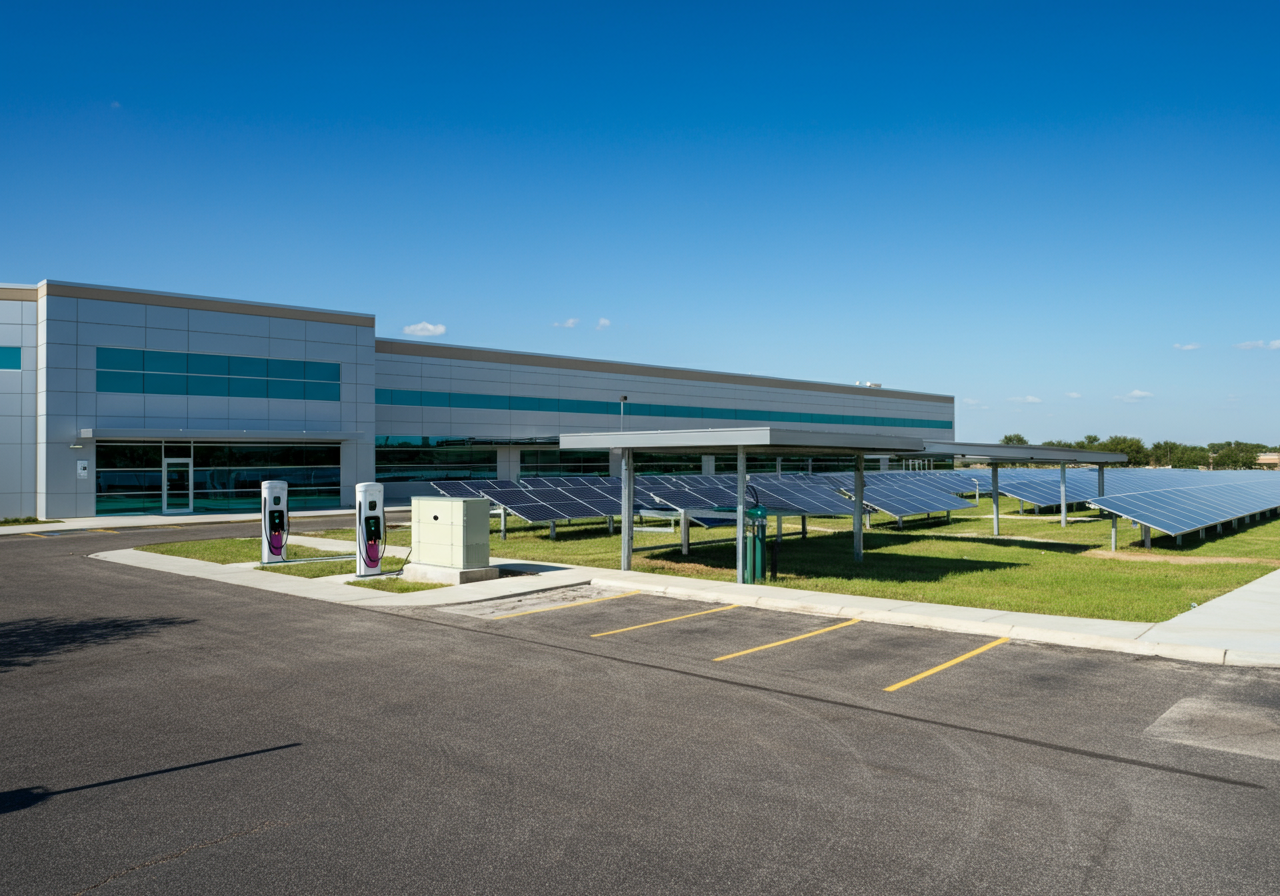
Open land changes the equation. When businesses have acreage, ground-mount systems outperform rooftop designs. They allow precise orientation toward the sun and better tilt angles. Technicians can maintain them without navigating roof obstacles.
There is another advantage. Ground mounts can expand more easily over time. When electricity needs grow, adding more panels does not mean reinforcing a roof. Many logistics centers, storage yards, and agricultural facilities choose this approach for predictable scaling.
The drawback is land usage. Some companies cannot spare the space. Others must manage soil conditions or local wildlife. Even so, ground-mounted commercial solar energy systems remain a practical choice for long-term growth.
Solar Carports That Produce Energy and Provide Shade
Solar carports serve two purposes at once. They create shaded parking and produce electricity for the property. When designed well, they add visual structure to entry areas and support electric vehicle charging stations.
These systems cost more than rooftop installations because of the steel structure underneath. Yet many property owners feel the tradeoff is reasonable. They generate power and improve comfort while showing visible sustainability commitments. It is a setup that appeals to universities, shopping centers, medical campuses, and corporate offices.
Comparing System Categories at a Glance
A quick overview helps decision makers narrow down their choices.
| System Type | Connection Style | Storage Requirement | Business Fit | Key Advantage |
| Grid-Tied Rooftop | Connected to the utility grid | Optional | Retail spaces, office buildings, and schools | Reduces utility dependence while keeping grid backup |
| Hybrid Solar | Grid connected with battery support | Required | Facilities with sensitive loads or irregular power needs | Smoother power delivery during outages or price spikes |
| Off-Grid Solar | Fully independent from the grid | Required | Remote sites, ranches, rural operations | Complete autonomy with controlled energy use |
| Ground Mount | Works with or without a grid | Optional | Properties with available land | Flexible layout and easy expansion |
| Solar Carports | Grid or hybrid connection | Optional | Campuses, medical centers, corporate sites | Generates power while improving parking comfort |
Different systems suit different spaces. A building with limited sunlight on its roof may benefit from a ground mount. A warehouse running forklifts all day might lean heavily toward hybrid setups with strong battery capacity. Each environment changes the recommended design.
How Solar Storage Shapes Commercial Energy Independence
Storage plays a bigger role today than it once did. A battery bank paired with solar power systems creates a buffer that smooths demand spikes. It also reduces the impact of utility curtailment periods or sudden outages during storms.
Some Texas businesses have noticed a pattern. When grid prices rise late in the afternoon, their storage automatically discharges and lowers the draw. It is a small example, yet it shows how commercial solar energy systems build flexibility that traditional setups never offered.
Thinking About Choosing a System for Your Property
At this stage, many property managers start comparing long-term gains with initial investments. A solar array reshapes electricity use and, for some buildings, stabilizes critical operations. The type of system chosen directs everything from resilience to monthly savings.
So the selection process feels less like picking equipment and more like shaping future operating behavior. Every business, from warehouses to medical clinics, brings its own pattern of energy use. Understanding that pattern is often the first step toward selecting the right system.
Plan Your Solar Battery Installation with Confidence
Thinking about evaluating options for your site and not sure where to begin with actual installation planning? In this matter, TX Solar Batteries can serve as of what to look for. Certified installers, on-site assessments, battery expertise, and strong equipment partnerships make the process smoother.
The goal is not to choose the fanciest system, but the one that works for your structure, your operations, and your long-term plans.
Get a Free On-Site Assessment from Certified TX Solar Experts Today!
Conclusion
Commercial solar offers choices that suit almost any business environment across Texas. Grid-tied, hybrid, off-grid systems, and specialized designs each bring different strengths. When matched properly to the property and its demands, these systems create long-term stability that many companies quietly rely on today.
The landscape continues to evolve, and your building could be part of that shift.
FAQs
What is the most common type of commercial solar setup?
Grid-tied systems remain widely used because they blend solar with the existing utility connection.
Do commercial solar panels work during outages?
Only hybrid and off-grid systems with batteries keep operating during outages.
How long do commercial solar energy systems last?
Panels often function for 25 to 30 years, depending on the brand and environment.
Are ground mounts better than rooftop systems?
Ground mounts allow flexible orientation, but rooftops save land space. The better choice depends on the property.
Can solar carports support EV charging?
Yes. Solar carports are commonly paired with charging stations on commercial lots.